Different Types of Affiliate Marketing Explained
Affiliate marketing has matured into one of the most reliable revenue channels in the technology sector. From SaaS platforms to consumer electronics, companies of every size now rely on affiliate partners to drive qualified traffic and conversions. Yet affiliate marketing is not a single, uniform model. The strategies, payment structures, and partner relationships vary significantly, and choosing the wrong type can undermine even the most well-funded campaign. This article breaks down the principal types of affiliate marketing, explains how each model works, and helps technology marketers determine which approach fits their goals.
What Is Affiliate Marketing?
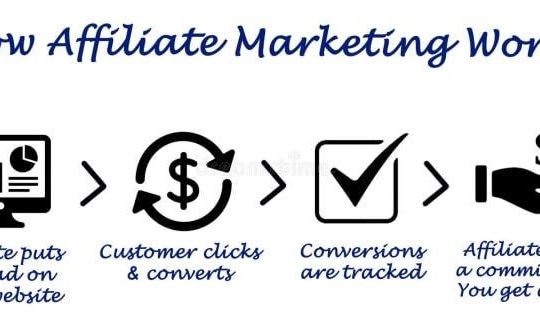
At its core, affiliate marketing is a performance-based arrangement in which a business rewards one or more partners for traffic or sales generated through the partner’s marketing efforts. The affiliate promotes a product or service, typically through a unique tracking link, and earns a commission when a defined action occurs—a click, a lead, or a purchase. For technology companies, this model offers measurable ROI, because payment is tied directly to results rather than to impressions or reach.
The structure of the commission, the type of partner, and the channel used to promote the offer define the different affiliate marketing types discussed below.
The Main Types of Affiliate Marketing
1. Pay-Per-Sale (Revenue Share) Affiliate Marketing
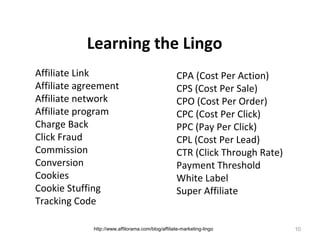
Pay-per-sale is the most widely recognized model. The affiliate earns a commission only when a customer completes a purchase through the affiliate’s link. Commissions may be a fixed amount per sale or a percentage of the transaction value, often called a revenue share.
This model suits technology companies with clear conversion funnels and strong analytics. SaaS providers, for example, frequently pay recurring revenue shares for the lifetime of a subscriber, which aligns the affiliate’s incentives with customer retention.
- Best for: SaaS, software licenses, hardware with established demand
- Advantage: Low risk—you pay only for confirmed sales
- Challenge: Requires robust tracking and attribution infrastructure
2. Pay-Per-Lead (CPL) Affiliate Marketing
In a pay-per-lead arrangement, the affiliate is compensated for generating a qualified lead rather than a completed sale. A lead might be a newsletter signup, a demo request, a free-trial registration, or a completed contact form.
CPL works well for B2B technology companies with longer sales cycles, where the final conversion happens inside a sales team rather than at checkout. The affiliate’s role is to fill the top of the funnel with prospects who match a defined profile.
- Best for: Enterprise software, managed services, IT consulting
- Advantage: Faster payouts for affiliates and predictable lead volume for advertisers
- Challenge: Lead quality varies; strict qualification criteria are essential
3. Pay-Per-Click (PPC) Affiliate Marketing
Pay-per-click compensates affiliates for each visitor directed to the advertiser’s site, regardless of whether that visitor converts. While less common in high-value technology niches, PPC remains useful for building brand awareness and driving traffic to content assets.
Advertisers should approach this model with caution. Because payment is tied to traffic rather than outcomes, click fraud and low-quality sources can erode returns. Robust fraud detection and clear traffic-quality guidelines are non-negotiable.
4. Pay-Per-Call Affiliate Marketing
Pay-per-call is a specialized model in which affiliates generate inbound phone calls from prospective customers. It is particularly effective for technology services that close deals over the phone, such as IT support, telecom providers, and local tech installation services.
Call tracking numbers allow advertisers to attribute each call to the correct affiliate and measure call duration and quality. This model bridges digital marketing and traditional sales conversations.
5. Coupon and Deal Affiliates
Coupon affiliates publish discount codes, promotional offers, and limited-time deals. They typically attract price-sensitive shoppers who are already close to purchase. In the technology space, this model appears frequently around hardware launches, accessory bundles, and software subscription promotions.
These partners can deliver volume quickly, but they often cannibalize sales that would have occurred anyway. Careful monitoring of incremental lift is advisable.
6. Content and Review Affiliates
Content affiliates earn commissions by publishing in-depth reviews, comparisons, tutorials, and buying guides. For technology products—where purchase decisions depend heavily on specifications and hands-on evaluation—this model is often the highest-value affiliate type.
Trusted reviewers and technical publications influence buyer intent at the consideration stage. Advertisers benefit from credible, long-form content that continues to generate traffic for years.
7. Influencer and Social Media Affiliates
Influencer affiliates promote products through social platforms, video channels, and live streams. In technology, this includes unboxing videos, productivity workflow demonstrations, and developer-focused tutorials. Compensation may follow a flat fee, a commission, or a hybrid structure.
This model excels at reaching niche communities and building brand affinity, though performance can be inconsistent and requires diligent partner selection.
8. Email Marketing Affiliates
Email affiliates promote offers through newsletters and opt-in subscriber lists. When the list is well-segmented and genuinely engaged, email can produce high conversion rates at relatively low cost. Technology newsletters focused on specific verticals—cybersecurity, cloud infrastructure, or developer tools—are especially effective partners.
Comparison of Affiliate Marketing Types
| Pay-Per-Sale | Completed purchase | SaaS, software, hardware | Attribution complexity |
| Pay-Per-Lead | Qualified lead | B2B and enterprise tech | Variable lead quality |
| Pay-Per-Click | Website visit | Brand awareness campaigns | Click fraud |
| Pay-Per-Call | Inbound phone call | IT services, telecom | Call-quality screening |
| Coupon/Deal | Purchase with code | Hardware promotions | Sales cannibalization |
| Content/Review | Purchase via referral | Considered purchases | Long ramp-up time |
| Influencer/Social | Commission or fee | Niche community reach | Inconsistent performance |
| Purchase or lead | Vertical newsletters | List fatigue |
How to Choose the Right Affiliate Model
Selecting the right type begins with a clear understanding of your sales cycle and unit economics. Consider the following steps:
Conclusion
Affiliate marketing in the technology sector is not a one-size-fits-all discipline. Pay-per-sale and pay-per-lead models dominate performance-driven programs, while content, influencer, email, coupon, and pay-per-call strategies serve distinct stages of the buyer journey. The most effective programs combine several types, match compensation to genuine business outcomes, and enforce rigorous tracking and quality standards. Companies that treat affiliate marketing as a strategic, measured channel—rather than a simple referral scheme—consistently achieve stronger, more sustainable returns.