Keyword Research Techniques for Affiliate Marketers
In affiliate marketing, traffic is the lifeblood of revenue, and keywords are the vehicle that delivers that traffic. The difference between a profitable campaign and a costly failure often comes down to the quality of your keyword research. Affiliate marketers face a unique challenge: they must identify keywords that attract buyers, not just browsers, while navigating competition from merchants, other affiliates, and established publishers. This article outlines proven keyword research techniques that help affiliate marketers uncover high-converting opportunities and build sustainable organic and paid traffic strategies.
Why Keyword Research Matters for Affiliates
Affiliate marketing operates on a simple premise: connect a motivated searcher with a product or service that solves their problem, and earn a commission when they convert. Keywords are the bridge between intent and offer. Effective keyword research allows affiliates to:
- Understand purchase intent and target users who are ready to act.
- Identify low-competition opportunities where smaller sites can rank.
- Align content with the buyer journey, from awareness to decision.
- Reduce wasted ad spend by focusing on commercially viable terms.
- Discover emerging trends before competitors saturate them.
Without disciplined keyword research, affiliates risk chasing high-volume terms that attract informational traffic with little commercial value, or investing in keywords so competitive that ROI becomes impossible.
Start With Seed Keywords and Buyer Intent
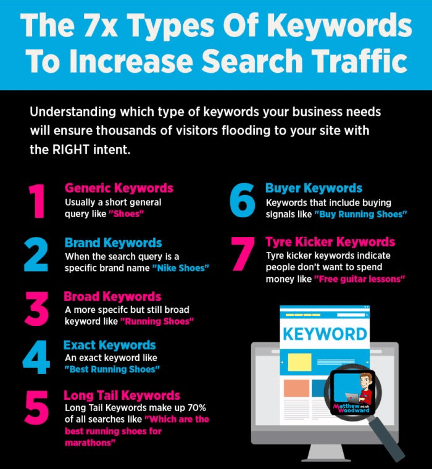
Every keyword strategy begins with seeds—broad terms that describe your niche, product category, or problem. For affiliate marketers, seeds should be filtered through the lens of intent. Consider these intent categories:
Build seed lists from merchant product names, customer pain points, competitor content, and common questions in forums and social communities. Tools like Google Keyword Planner, Ahrefs, Semrush, and Ubersuggest can expand these seeds into hundreds of variations.
Target Long-Tail and Low-Competition Keywords
Long-tail keywords—typically three to five words or more—are the affiliate marketer’s best friend. They carry lower search volume but far higher intent and less competition. A page targeting “best noise-cancelling headphones for open offices” is more likely to convert than one targeting “headphones.”
To find long-tail opportunities, use question-based research, autocomplete suggestions, “People Also Ask” boxes, and keyword difficulty filters. Prioritize terms where the difficulty score is modest relative to the commercial value of the click.
Analyze Competitor Keywords
Competitor analysis is one of the fastest routes to profitable keywords. Identify the affiliate sites and publishers ranking for your target terms, then reverse-engineer their strategies:
- Use tools like Ahrefs or Semrush to extract their organic keyword profiles.
- Look for comparison and review pages that rank well and earn backlinks.
- Identify gaps—keywords they rank for weakly or ignore entirely.
- Examine their paid search ads to understand which terms they monetize.
This technique reveals proven demand and helps you avoid reinventing the wheel. The goal is not imitation but differentiation: find underserved angles within validated keyword clusters.
Evaluate Keyword Metrics That Matter
Not all metrics are equally important for affiliates. Volume alone can be misleading. Use the following framework to assess each keyword:
| Search Volume | Estimated monthly searches | Baseline demand indicator |
| Keyword Difficulty | Ranking competitiveness | Determines feasibility for smaller sites |
| Cost-Per-Click | Paid search cost estimate | Proxy for commercial value |
| Click-Through Rate | Likelihood of clicks from SERPs | Signals intent strength |
| Conversion Potential | Likelihood of purchase action | Directly impacts commission revenue |
High CPC often indicates strong commercial intent—merchants are willing to pay for those clicks because they convert. Combine CPC with difficulty and volume to prioritize keywords that balance opportunity and effort.
Leverage SERP Analysis and Content Gaps
Before committing to a keyword, analyze the search engine results page. Ask:
SERP analysis reveals whether a keyword is worth pursuing and what format your content should take. If the top results are thin affiliate pages, a well-researched, experience-driven review may outrank them. If the SERP is dominated by authoritative retailers, consider adjacent long-tail variations instead.
Validate With Paid Search and Track Performance
Keyword research does not end with a spreadsheet. Validate assumptions with small paid search tests where budget allows, and monitor organic performance after publishing. Track impressions, click-through rates, conversion rates, and commission earnings per keyword cluster. Over time, this data refines your targeting and reveals hidden opportunities that volume estimates alone cannot capture.
Conclusion
Keyword research is both an art and a science for affiliate marketers. By starting with intent-driven seeds, prioritizing long-tail opportunities, analyzing competitors, and evaluating metrics through a commercial lens, affiliates can build campaigns that attract buyers rather than casual readers. Combine these techniques with continuous testing and SERP analysis, and your keyword strategy becomes a durable competitive advantage—one that turns search visibility into measurable affiliate revenue.