Recurring vs One-Time Affiliate Commissions: Which Model Maximizes Long-Term Revenue?
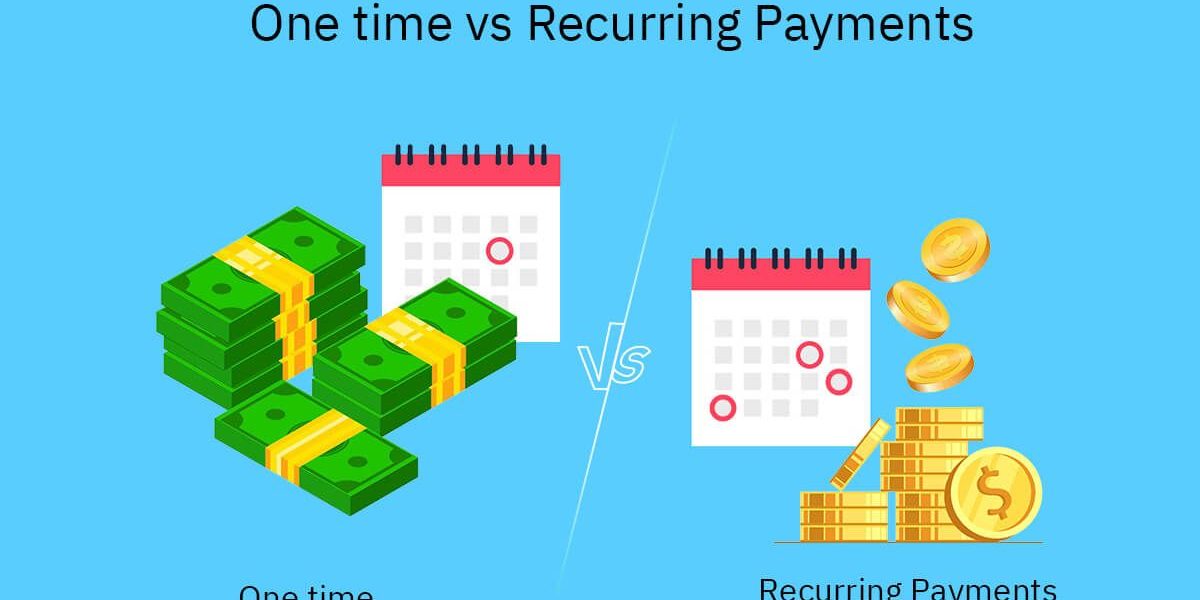
Affiliate marketing has matured into one of the most reliable acquisition channels in the tech sector, and the commission structure you choose—or the programs you join—shapes your income trajectory far more than most affiliates realize. The central strategic decision comes down to two models: recurring commissions, where you earn a percentage of a customer’s subscription for as long as they remain active, and one-time commissions, where you receive a single payout per conversion. Both models can generate significant revenue, but they reward fundamentally different content strategies, audiences, and time horizons.
This analysis breaks down how each model works, where it excels, and how sophisticated tech affiliates combine them into a durable revenue engine.
Understanding the Two Commission Models
How Recurring Affiliate Commissions Work
Recurring commissions pay you a percentage of each billing cycle—typically monthly or annually—for the lifetime of the customer’s subscription. This model dominates in SaaS, cloud infrastructure, cybersecurity, and developer tooling, where vendors earn predictable subscription revenue and can afford to share it with partners who drive retention.
Common structures include:
- Lifetime recurring: You earn on every renewal for as long as the customer stays subscribed, often at 20–40% of the subscription value.
- Fixed-duration recurring: Payouts continue for a set period, such as 12 or 24 months, after which the commission stops.
- Tiered recurring: Your percentage increases as you refer more customers or higher-value plans.
How One-Time Affiliate Commissions Work
One-time commissions pay a single, often larger, sum per conversion. This model is standard for hardware, licensed software, online courses, and many consumer tech products. Payouts may be a flat fee or a percentage of the initial sale, and once the transaction clears, your relationship with that revenue stream ends.
- Flat-fee payouts: A fixed amount per sale, common with physical products and standalone software licenses.
- Percentage of sale: A share of the first purchase, frequently 10–50% depending on margins.
- Hybrid structures: A one-time bounty plus a short recurring tail, increasingly common in fintech and B2B SaaS.
Head-to-Head Comparison
| Revenue timing | Compounds monthly; grows with retention | Immediate but linear; resets with each sale |
| Per-conversion payout | Lower upfront value | Higher upfront value |
| Content strategy | Depth, onboarding, retention-focused | Volume, comparison, transactional intent |
| Risk profile | Churn risk; platform dependency | Traffic volatility; no residual income |
| Scalability ceiling | High—income decouples from new traffic | Moderate—income tied to constant promotion |
| Best-fit niches | SaaS, hosting, security, dev tools | Hardware, courses, one-off licenses |
The Compounding Advantage of Recurring Revenue
The core math of recurring commissions is straightforward: a single referral can pay for years. A customer acquired in month one at a 30% commission on a $100 monthly subscription generates $360 in year one—and another $360 in year two, assuming retention. Ten such customers referred per month can build into a five-figure monthly baseline within a year, independent of new traffic.
This decoupling of income from promotion volume is the model’s defining strength. It rewards affiliates who invest in high-intent, evergreen content—tutorials, integration guides, and in-depth comparisons—that continues to convert long after publication. It also aligns your incentives with the vendor’s: you benefit when customers stay, upgrade, and expand.
The trade-off is churn exposure. If your audience skews toward short-term trials or price-sensitive buyers, recurring income erodes quietly. Program terms also matter: lifetime tracks are far more valuable than 12-month caps, and you should verify how downgrades, refunds, and cancellations affect payouts before committing.
Where One-Time Commissions Win
One-time commissions offer advantages that recurring programs cannot match. Cash flow is immediate and predictable per sale, which suits affiliates with strong transactional traffic—deal sites, review aggregators, and YouTube channels built around purchase moments. Higher per-conversion payouts also make paid acquisition viable: if a one-time bounty exceeds your cost per acquisition, you can scale spend profitably without waiting months to recoup.
Additionally, one-time models reduce platform risk. A single program change or commission cut affects only future sales, not an accumulated book of residual income. For hardware and course niches where subscriptions simply do not exist, one-time payouts are the only option—and often generous ones.
The limitation is the treadmill: income stops when promotion stops. Every month begins at zero, and scaling requires ever-increasing traffic or conversion rates.
A Practical Framework for Tech Affiliates
Rather than choosing sides, high-earning tech affiliates typically build a portfolio:
Final Verdict
For long-term revenue in the tech niche, recurring commissions generally outperform one-time payouts—provided you can drive qualified, retention-prone customers. The compounding nature of subscription income rewards patience and content depth, and it builds an asset that grows while you sleep. One-time commissions remain indispensable for cash flow, transactional traffic, and product categories without subscriptions.
The strongest strategy is not a binary choice but a deliberate blend: recurring programs as the foundation, one-time offers as the accelerant. Affiliates who understand both models—and deploy each where it performs best—are the ones who turn affiliate income from a side channel into a sustainable business.