
How Affiliate Marketers Earn Money Online
Affiliate marketing is one of the most accessible and sustainable revenue models in the digital economy. It allows publishers, content creators, and technology reviewers to monetize their audience by recommending products and services they genuinely trust. In essence, affiliate marketers earn a commission when a user they refer completes a desired action — such as a purchase, a free trial signup, or a subscription — on a merchant’s website. Understanding the mechanics behind this model is essential for anyone looking to build a reliable online income stream in the tech niche.
The Core Mechanism: How Affiliate Marketers Get Paid
At its foundation, affiliate marketing is a performance-based partnership between a merchant and a publisher. The merchant provides a unique tracking link or code, and the affiliate marketer distributes it through their content, audience, or platforms. When a user clicks that link and converts, the merchant’s tracking system attributes the sale or action to the affiliate and pays a commission.
The process generally follows a clear sequence:
This structure benefits all parties: merchants acquire customers on a pay-for-performance basis, audiences receive informed recommendations, and affiliates earn income without holding inventory or managing customer support.
The Primary Affiliate Commission Models
Affiliate marketers in the technology space earn money through several distinct compensation structures. The right model depends on the product, the merchant’s pricing strategy, and the affiliate’s audience intent.
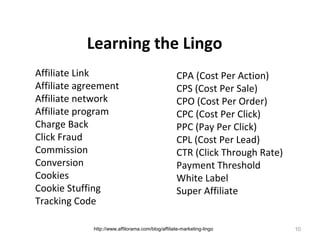
- Pay-Per-Sale (Revenue Share): The affiliate earns a percentage of the sale value or a fixed bounty per conversion. This is common for SaaS products, hosting providers, and hardware retailers.
- Pay-Per-Lead (CPL): The affiliate is compensated when a user submits a form, requests a demo, or signs up for a free trial. This model suits B2B software and financial technology services.
- Pay-Per-Click (CPC): The affiliate earns a small amount each time a user clicks the tracked link. This is less common but appears in display and content networks.
- Recurring Commissions: Many subscription-based tech companies pay affiliates a percentage of each renewal payment, creating a compounding income stream.
- Two-Tier Programs: Affiliates earn a percentage of the commissions generated by marketers they recruit, adding a network-based revenue layer.
Common Affiliate Marketing Channels
Affiliate marketers distribute their links across a range of channels, each with distinct audience behavior and conversion characteristics. Successful marketers typically combine multiple channels to diversify risk and stabilize earnings.
Content and SEO-Driven Websites
Review sites, comparison portals, and tutorial blogs attract high-intent search traffic. A well-optimized article comparing cloud hosting providers or productivity software can generate commissions for years with minimal ongoing maintenance. This channel rewards technical accuracy, thorough testing, and strong search engine optimization.
Email Newsletters and Communities
Curated newsletters and niche communities — such as developer forums or productivity-focused groups — build trust through consistent, high-value recommendations. Because subscribers opt in, conversion rates in email often exceed those of broader channels.
Video and Social Platforms
YouTube reviews, short-form video demonstrations, and social media tutorials drive affiliate conversions through visual proof and direct audience engagement. Tech marketers frequently pair video content with dedicated landing pages and discount codes to improve attribution.
Paid Advertising and Comparison Engines
Some affiliates invest in paid search or social campaigns that direct traffic to affiliate offers, carefully managing the cost per acquisition against commission payouts. This approach requires disciplined budget control and precise tracking.
Key Success Factors for Affiliate Marketers
Earning consistently as an affiliate marketer requires more than publishing links. The most effective professionals focus on the following principles:
- Audience Trust: Recommend only products that meet genuine needs and deliver on their promises. Credibility is the affiliate’s core asset.
- Content Quality: Detailed reviews, transparent testing, and honest comparisons outperform thin promotional pages in both search rankings and conversion rates.
- Data Analysis: Track click-through rates, conversion rates, and earnings per click to optimize content and channel strategy.
- Diversification: Build relationships with multiple merchants and networks to reduce dependence on any single program.
- Compliance: Disclose affiliate relationships clearly, in accordance with regulations and platform policies, to protect both audience trust and legal standing.
Earnings at a Glance
The table below summarizes how different commission models translate into income for affiliate marketers.
| Pay-Per-Sale | Percentage or fixed bounty per completed purchase | SaaS tools, hardware retailers | High value per conversion, variable volume |
| Pay-Per-Lead | Fixed payment per qualified signup or demo request | B2B software, fintech services | Steady, predictable conversions |
| Recurring Commission | Percentage of each subscription renewal | Hosting providers, security software | Compounding, long-term income |
| Two-Tier | Bonus on commissions from recruited affiliates | Marketing platforms, networks | Network-driven growth potential |
Conclusion
Affiliate marketers earn money online by connecting interested audiences with relevant products and being compensated for verified results. In the technology sector, where buyers actively research before purchasing, affiliates who publish accurate, well-structured content and maintain audience trust can build substantial and durable revenue. The model demands patience, analytical rigor, and a genuine commitment to quality — but for professionals who execute it well, affiliate marketing remains one of the most scalable paths to online income.