Essential Skills Every Affiliate Marketer Should Develop
Affiliate marketing appears deceptively simple from the outside. You join a program, share a link, and collect a commission when someone buys. In practice, the affiliates who consistently earn meaningful income are those who treat the discipline as a genuine business and invest in a specific, overlapping set of skills. Technology evolves, algorithms change, and consumer behavior shifts, but the core competencies that separate top performers from the rest of the field remain remarkably stable. This article breaks down the essential skills every affiliate marketer should develop, why each one matters, and how to build it deliberately.
Content Creation and Copywriting
At its core, affiliate marketing is a communication business. You are persuading a specific audience that a specific product solves a specific problem. That requires the ability to write clearly, structure arguments logically, and motivate action without resorting to hype.
Strong affiliate copywriters understand the difference between features and benefits, anticipate objections, and place calls to action where readers are most receptive. They also adapt their voice to the platform, whether that is a long-form review, a comparison table, an email sequence, or a short social post.
- Headline writing: Capturing attention in an increasingly crowded feed.
- Product reviews and comparisons: Building trust through honest, detailed analysis.
- Email copy: Nurturing subscribers and driving repeat conversions.
- Call-to-action optimization: Turning interest into measurable clicks.
If writing is not your natural strength, treat it as a trainable craft. Study high-performing affiliate content in your niche, analyze its structure, and practice consistently.
Audience Research and Market Segmentation
You cannot write persuasive content for an audience you do not understand. Audience research is the skill of identifying who your potential buyers are, what problems they face, and what language they use to describe those problems.
Effective affiliate marketers build buyer personas, monitor community discussions, analyze search intent, and segment their audiences by stage of awareness. A beginner searching “what is X” needs different content from a buyer searching “X vs Y comparison.”
| Unaware | No recognized problem | Educational articles, social content |
| Problem-aware | Seeking solutions | How-to guides, listicles |
| Solution-aware | Comparing options | Reviews, comparison tables |
| Purchase-ready | Ready to buy | Direct offers, discount pages |
Segmenting by intent allows you to match messaging to mindset, which is one of the highest-leverage improvements an affiliate can make.
Search Engine Optimization and Discoverability
Organic search remains one of the most durable traffic sources in affiliate marketing. SEO is therefore a foundational skill, not an optional one.
Affiliates should understand keyword research, on-page optimization, site structure, internal linking, and the fundamentals of technical SEO. They should also recognize that search engines reward content demonstrating genuine expertise and helpfulness, which aligns well with the honest-review approach that builds long-term affiliate businesses.
Data Analysis and Performance Tracking
Guessing is expensive. The best affiliate marketers make decisions based on data: click-through rates, conversion rates, earnings per click, and traffic-source performance.
You do not need to be a data scientist, but you do need to be comfortable with analytics dashboards, affiliate network reports, and basic spreadsheet modeling. The ability to isolate what is working, discard what is not, and double down on proven channels is what separates scalable operations from hobbyist efforts.
- Tracking link performance across multiple campaigns.
- Calculating earnings per click to compare traffic sources.
- Running structured A/B tests on copy, offers, and layouts.
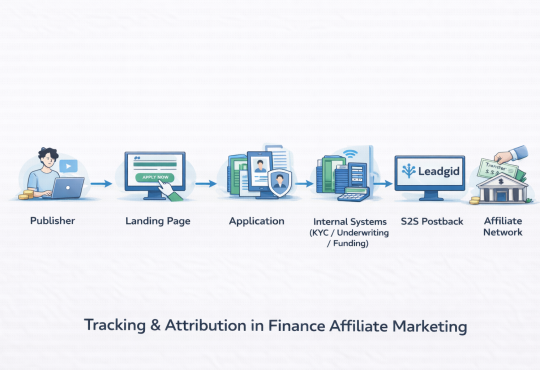
- Attributing conversions accurately to avoid false conclusions.
Technical Fluency
Affiliate marketing increasingly rewards those who can operate the tools of the trade. A working knowledge of content management systems, link management platforms, email marketing software, and analytics tools is essential.
Modern affiliates also benefit from an understanding of tracking parameters, cookies, consent requirements, and basic HTML. The more comfortable you are with the technical layer, the faster you can test ideas and the less you depend on others to execute.
Ethical Persuasion and Trust Building
Long-term affiliate income is built on trust. Audiences are sophisticated and quick to detect exaggeration or hidden incentives. The skill of ethical persuasion involves disclosing affiliate relationships clearly, recommending products honestly, and refusing to promote offers you would not use yourself.
Trust compounds. A single well-placed, honest recommendation to an engaged audience can outperform a dozen aggressive promotions to a skeptical one.
Adaptability and Continuous Learning
Platforms change policies, search algorithms update, and commission structures shift. Adaptability is the meta-skill that protects every other competency you develop.
- Following industry news and policy changes.
- Diversifying traffic sources rather than depending on one channel.
- Testing new formats and platforms early.
- Reviewing and updating your strategy on a fixed schedule.
Conclusion
Affiliate marketing rewards a combination of communication, analytical, technical, and ethical skills. Content creation and audience research determine whether your message lands. SEO and data analysis determine whether it scales. Technical fluency and adaptability keep you competitive as the landscape changes. Trust, cultivated through ethical persuasion, determines whether your audience stays with you for years.
The encouraging reality is that each of these skills can be learned incrementally. Start with the one that most limits your current results, build it deliberately, and layer in the next. Over time, that compounding effort becomes the foundation of a durable affiliate business.